Views: 101 Author: Site Editor Publish Time: 2026-02-18 Origin: Site


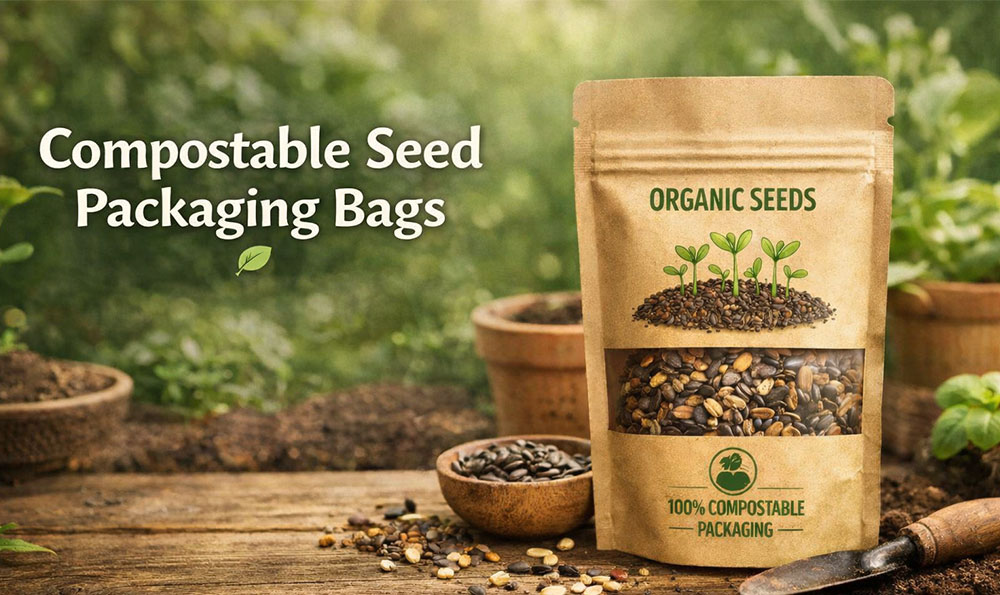
As sustainability becomes a priority across agriculture, gardening, and retail markets, more brands are shifting away from traditional plastic seed pouches. One of the fastest-growing solutions is compostable seed packaging bags — designed to protect seeds while reducing long-term environmental impact.
But how do compostable seed packaging bags actually work? And are they suitable for commercial seed brands?
Let's break it down.
What Are Compostable Seed Packaging Bags?
Compostable seed packaging bags are flexible pouches made from plant-based or compostable materials that can break down into natural elements under composting conditions.
Unlike traditional plastic seed packaging, these bags are designed to:
Maintain seed freshness
Provide moisture and oxygen control
Decompose safely in compost environments
Reduce landfill waste
They are commonly used for vegetable seeds, flower seeds, organic herb seeds, and retail gardening kits.
How Do Compostable Seed Packaging Bags Work?
Compostable seed packaging bags function through a combination of material science, barrier protection, and controlled biodegradation.
1. Material Structure
Most compostable seed bags are made from materials such as PLA (derived from corn starch), PBAT (a compostable polymer blend), compostable kraft paper laminations, and cellulose films.
These materials are engineered to provide short-term durability but long-term biodegradability.
2. Barrier Protection for Seed Freshness
Seeds require protection from moisture, Oxygen, and light exposure. High-quality compostable seed packaging often includes moisture barrier layers, Oxygen control properties, optional compostable zipper closures, and heat-sealed edges.
This ensures seeds remain viable throughout their shelf life, especially for retail and wholesale seed packaging applications.
3. The Composting Process
Once disposed of properly, compostable seed packaging bags break down under:
Industrial composting conditions (high heat, controlled humidity)
Certain home composting environments (depending on certification)
During decomposition:
Microorganisms consume the material
It converts into CO₂, water, and biomass
No toxic residue remains
Breakdown time usually ranges from 90 to 180 days in industrial composting systems.
Do Compostable Seed Bags Affect Seed Viability?
This is one of the most searched questions.
The answer depends on:
Material quality
Barrier performance
Storage conditions
Shelf life requirements
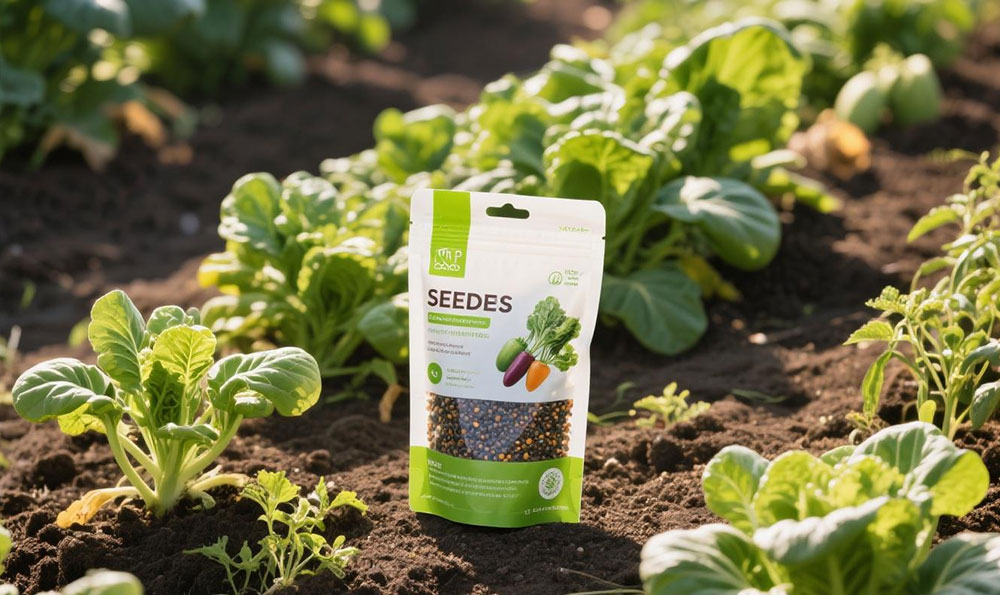
Well-designed compostable seed packaging solutions can provide adequate protection for short to medium shelf life seeds, organic and heirloom seeds, and retail gardening products.
For long-term storage or export environments with high humidity, enhanced barrier compostable laminations may be recommended.
Can Compostable Seed Packaging Be Customized?
Absolutely.
Modern compostable seed packaging bags can include:
Custom printing (water-based inks)
Matte or kraft finish
Clear compostable windows
Resealable zippers
Hang holes for retail display
Various sizes (flat pouches, stand-up pouches)
This makes them suitable for private label seed brands, garden centers, eco-focused agricultural companies, and organic farming cooperatives.
Why Brands Are Switching to Compostable Seed Packaging
Here are the top reasons:
Meets sustainability goals
Aligns with eco-conscious gardening trends
Reduces plastic waste
Enhances brand positioning
Supports ESG initiatives
Appeals to younger environmentally aware consumers
In markets like North America and Europe, compostable seed packaging is becoming a competitive advantage rather than just a trend.

Future of Compostable Seed Packaging
The global shift toward sustainable agriculture and regenerative gardening practices is accelerating demand for eco-friendly packaging.
Innovations now include:
High-barrier compostable films
Home-compost certified materials
Carbon-neutral packaging options
Plantable packaging concepts
As sustainability regulations tighten, compostable seed packaging bags are expected to become the new industry standard.
So, how do compostable seed packaging bags work?
They combine protective barrier technology with controlled biodegradation, offering a balance between performance and environmental responsibility.
For seed brands, garden retailers, and agricultural suppliers looking to reduce plastic dependency while maintaining product quality, compostable seed packaging bags are a forward-thinking solution. Let's help your seed brand reduce plastic and grow sustainably.
Contact our packaging experts now and start your eco transition.
FAQs
1. What are compostable seed packaging bags made from?
Compostable seed packaging bags are typically made from plant-based materials such as PLA (corn starch), PBAT blends, cellulose films, or compostable kraft laminations.
2. How long do compostable seed packaging bags take to break down?
Under industrial composting conditions, most compostable seed packaging bags break down within 90–180 days. Home composting times may vary depending on temperature and humidity.
3. Are compostable seed bags safe for organic seeds?
Yes. High-quality compostable seed packaging is safe for organic vegetable, herb, and flower seeds, provided proper barrier protection is used.
4. What is the difference between compostable and biodegradable seed packaging?
Compostable packaging must meet strict standards and break down into non-toxic compost, while biodegradable materials may degrade without guaranteed residue-free results.