Views: 560 Author: Site Editor Publish Time: 2024-11-14 Origin: Site


Choosing the best packaging for spices can preserve flavor and aroma, extend shelf life, and ensure a good appearance. With various packaging options, it is important to choose materials and designs that can keep spices fresh, protect against moisture and air, and enhance the product's visual appeal.
Spices are very sensitive to environmental factors, including air, moisture, light, and heat. When exposed to these elements, spices lose their potency, color, and overall quality. The best packaging for spices should have the following key features:
Sealing property: Spice packaging should have good sealing performance to prevent moisture and odor transfer. A well-sealed package can ensure that the freshness and flavor of the spices are not affected.
Moisture resistance: Since spices are easily affected by moisture, the packaging material should have moisture resistance to keep the spices dry and extend the shelf life.
Transparency: Some spice packaging designs use hollow or transparent parts, allowing consumers to see the spices themselves, and enhancing the sensory experience directly.
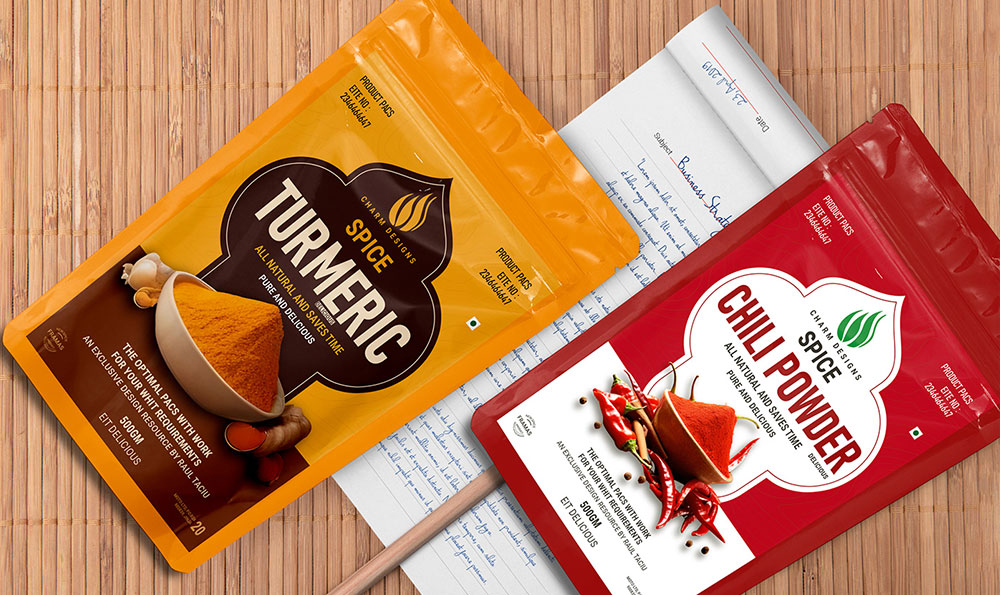
Creative design: The packaging design should be creative and beautiful. The artistic sense and uniqueness of the packaging can be increased through elements such as illustrations and handwritten fonts to enhance the user experience.
Brand logo: The packaging should have a clear brand logo and product name for easy recognition and memory by consumers.
Easy to use: Resealable packaging or convenient dispensers can improve the user experience and make the product more attractive to consumers.
Environmentally friendly materials: Packaging materials should be environmentally friendly and recyclable to reduce the impact on the environment.
Capacity design: According to the daily usage of spices, the packaging should be divided into different capacities to facilitate consumers to choose according to their needs.
Through the above design features, spice packaging can not only protect the quality of spices but also enhance the user experience and convey brand value.

1. Glass jars: Glass jars are a classic choice for spices. They can provide airtightness and visibility, which is very suitable for retail display.
2. Plastic containers: Plastic containers are lightweight, shatterproof, and usually transparent, saving space, and are a practical choice for storing spices.
3. Resealable Stand-Up Pouches: Resealable bags are one of the most versatile packaging options for spices. These bags are lightweight, cost-effective, and can be made with moisture-resistant materials such as foil lining or laminated plastic. Their resealable zippers make them convenient for repeated use and easy to store. They are a practical choice for storing spices, seasonings, condiments, herbs, etc.
4. Metal Cans: Metal cans are sturdy, light-proof, and often come with tight-fitting lids that help keep spices fresh. Jars can also add a premium feel, making them attractive to high-end spice brands.
5. Paper Tubes: Paper tubes are a more environmentally friendly option, often made from recyclable materials, and they have a unique and attractive look that can help brands stand out on the shelf.
Barrier properties are among the most important technical considerations when selecting flexible spice packaging.
Two commonly evaluated measurements are OTR and WVTR.
Oxygen Transmission Rate (OTR)
OTR measures the amount of oxygen that passes through a packaging material over a defined area and time under specified test conditions.
For spices that are sensitive to oxidation and aroma deterioration, oxygen barrier performance should be evaluated carefully.
A lower OTR generally indicates less oxygen transmission under comparable test conditions.
Water Vapor Transmission Rate (WVTR)
WVTR measures the amount of water vapor that passes through a material over a defined area and time under specified temperature and humidity conditions.
For hygroscopic spice powders, suitable moisture barrier performance helps reduce moisture ingress and the risk of caking.
A lower WVTR generally indicates less water vapor transmission under comparable test conditions.
Light Barrier
For light-sensitive spices, opaque and metallized structures may offer advantages over transparent packaging.
The required level of protection depends on the spice's natural pigments and expected storage conditions.
Seal Integrity
Even a high-barrier laminate cannot provide its intended protection if the finished package has weak seals, contamination or leakage.
Sealing temperature, pressure, dwell time, film compatibility and filling-line conditions should all be evaluated.
What is the best packaging material for ground spices?
High-barrier laminated structures such as PET/AL/PE and PET/MetPET/PE are common options for ground spices that require moisture, oxygen and light protection. The most suitable structure depends on the specific spice, shelf-life target and storage conditions.
Are stand-up pouches suitable for spice packaging?
Yes. Stand-up pouches are widely used for retail spice packaging because they offer shelf stability, flexible customization and optional resealable zippers. Their material structure should be selected according to the spice's barrier requirements.
Is aluminum foil necessary for spice packaging?
Not always. Aluminum foil provides a strong barrier against oxygen, moisture, light and external odors, but some applications may use metallized or other laminated structures. The final choice depends on the product's sensitivity and required shelf life.
Should spice packaging have a transparent window?
A transparent window can improve product visibility, but it may increase light exposure. It is important to balance appearance and product protection, especially for light-sensitive spices.
What packaging is best for chili powder?
Chili powder generally benefits from moisture-resistant, well-sealed packaging with suitable oxygen and light protection. An opaque high-barrier laminated pouch is a practical option to evaluate.
Can spices be packed in recyclable pouches?
Some spice products can use recyclable-oriented mono-material packaging structures. However, recyclability depends on the complete packaging design, required barrier performance and the recycling infrastructure available in the target market.
Can spices be packaged using compostable materials?
Certain spice packaging projects may be developed using certified compostable materials, but the finished packaging structure must meet the applicable certification requirements. Compostability should not be claimed based only on an individual film component.
What information is needed to get a custom spice packaging quotation?
Provide the spice type, filling weight, required dimensions, preferred packaging format, material requirements, artwork and estimated order quantity. This information helps determine the appropriate packaging configuration and quotation.
For spice brands, the choice of packaging can have a significant impact on brand perception and customer satisfaction. In fact, the best packaging for spices depends on the type of spice, expected shelf life, target market, and brand values. By choosing packaging that matches the product and consumer preferences, brands can ensure quality and satisfaction, helping spices enter kitchens around the world with full flavor.
Tell us what you are packaging, your required bag size, filling weight and estimated order quantity.
BioPack can help evaluate suitable material structures, packaging formats and customization options for your spice products.
Contact BioPack for a Custom Quote.