|






| Size: | |
|---|---|
| Quantity: | |
EFB23469
BioPack
EFB23469
customized
up to 10 colors
Custom Printing
customized
Customized
Product Description
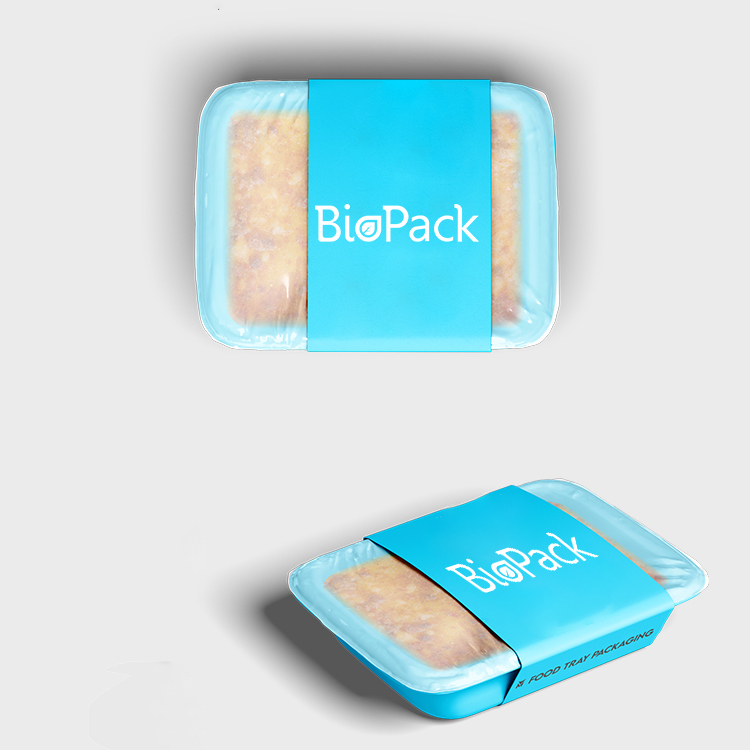
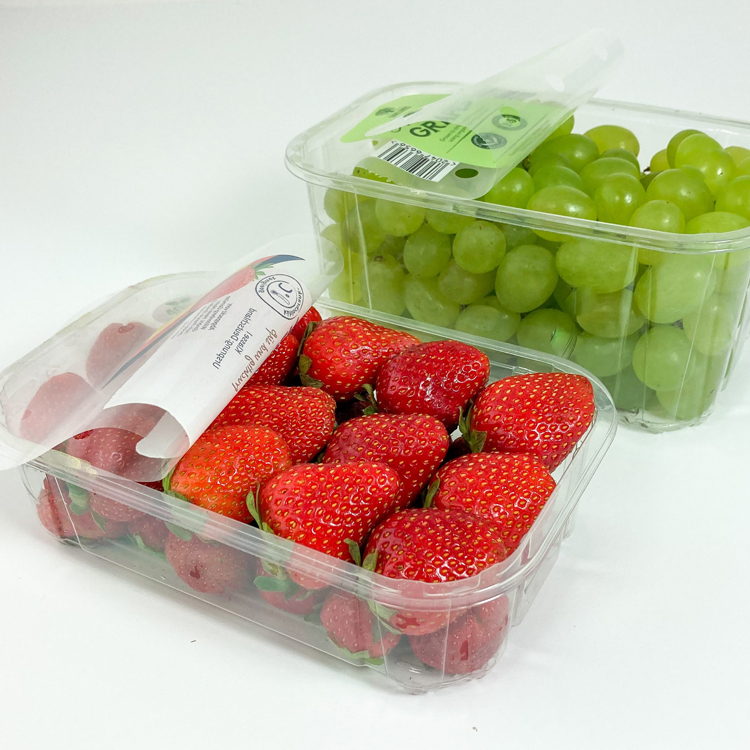
BioPack develops recyclable peelable lidding film food packaging for pet food packed in preformed trays, cups and tubs. The film is engineered to protect wet and semi-moist formulations while allowing consumers to open the package with a controlled, clean peel.
Typical applications include wet dog food, cat food pâté, meat chunks in gravy, fresh pet meals, nutritional toppers, broths and single-serve pet treats.
The film can be developed around PE or PP packaging platforms, depending on the tray material, heat-processing conditions and recycling requirements of the destination market. High-barrier, anti-fog, opaque and custom-printed options are available.
A suitable lidding film cannot be selected from the tray label alone. A tray described as "PP" or "PE" may have a coating, additive package or sealing surface that changes its heat-seal response. BioPack therefore, evaluates the film and tray as one packaging system.
At a Glance
Main applications: Wet dog food, wet cat food, pâté, gravy meals, fresh pet food and toppers
Film platform: PE-based, PP-based or compatible high-barrier mono-material structure
Typical thickness: range Approximately 45–120 microns
Peel profile: Easy peel, medium peel or stronger distribution-resistant peel
Film appearance: Clear, white, opaque, matte or gloss
Supply format: Printed or unprinted roll stock
Core options: Commonly 3-inch or 6-inch, subject to machine requirements
Processing: Chilled, frozen, ambient, hot-fill, pasteurization or project-specific thermal processing
Tray Material
The first step is to identify the actual sealing surface of the tray.
A PP lidding film does not automatically seal to every PP tray. Surface treatment, recycled content, additives and coatings can all affect the seal initiation temperature and peel behavior.
Whenever possible, BioPack recommends testing physical tray samples rather than choosing the film only from a material datasheet.
Pet Food Formulation
The product itself affects packaging performance.
A dry pâté and a high-liquid gravy meal may require different sealant behavior even when packed in the same tray.
Filling and Sealing Conditions
The usable sealing window depends on more than the nominal machine temperature.
A film that works during a slow laboratory test may behave differently on a high-speed production line. Final approval should therefore include both laboratory evaluation and a commercial line trial.
Wet pet food commonly contains proteins, fats and strong aromas. Barrier requirements should therefore be set according to the recipe and shelf-life target rather than using a generic "high-barrier" label.
Oxygen Barrier
Oxygen transmission rate should be measured under stated temperature and humidity conditions. A barrier value without test conditions is not suitable for comparing different films.
ASTM D3985 is one recognized method for measuring oxygen transmission through plastic films and multilayer structures.
Moisture Barrier
Moisture protection helps reduce weight loss, surface drying and changes in product texture.
Water vapor transmission rate may be measured according to ASTM F1249 or another agreed method. Results should include the test temperature, relative humidity and film thickness.
Aroma and Grease Resistance
Meat, fish and oil-based formulations may require additional resistance to aroma transfer and grease exposure. The selected sealant, ink and adhesive systems should remain suitable for the intended contact conditions.
Barrier targets should be confirmed through shelf-life testing using the final tray, lidding film, product and storage environment.

PE-based film can be considered for compatible PE trays and containers. It provides good moisture resistance and flexibility and may support a polyethylene-focused recycling strategy.
Where stronger oxygen protection is needed, a compatible barrier layer may be incorporated. The total structure must still be assessed against the intended recycling guideline.
PP-based film is commonly considered for compatible PP trays, cups and tubs. It can provide higher temperature resistance than many standard PE structures.
The actual thermal cycle must be provided before the film is selected.
A high-barrier structure may incorporate a controlled barrier layer to reduce oxygen transmission while keeping the main structure within one polymer platform.
Using the highest available barrier is not always necessary. A correctly specified barrier avoids unnecessary material complexity while still protecting the product.
Not every recyclable mono-material film is suitable for retort processing.
Retort conditions may expose the package to temperatures around 121°C together with pressure, moisture and an extended process time. The film, tray, sealant, ink and adhesive must all withstand the complete cycle without delamination, loss of barrier or seal failure.
A retort project should provide:
Retort temperature
Process duration
Counter-pressure conditions
Product acidity
Tray material
Filling temperature
Cooling method
Required shelf life
Where full retort performance is required, recyclability and thermal resistance must be assessed together. A standard easy-peel film should never be assumed to be retort-compatible without testing.
Lidding film is often the largest visible branding surface on a pet food tray. It can carry both marketing and legally required product information.
Reverse printing may be recommended where the structure allows it, helping protect the design from abrasion, grease and moisture.
Actual printing capability depends on film construction, roll width, artwork coverage and order volume.
What is recyclable peelable lidding film for pet food?
It is a flexible film used to seal preformed pet food trays, cups or tubs. The film is developed to maintain package integrity during distribution while peeling from the container with a controlled opening force.
Can one lidding film seal to every PP tray?
No. Different PP trays may contain different additives, coatings or sealing layers. Actual tray samples should be tested to confirm the seal window and peel behavior.
Can the lidding film seal through grease or gravy?
Certain sealant systems can tolerate light contamination better than standard films. However, no film can fully compensate for consistently wet, greasy or uneven tray flanges. Filling control and flange cleanliness remain important.
How is peel strength measured?
Peel strength can be measured according to ASTM F88/F88M. Results should be reported with the specimen width, test configuration, conditioning conditions and failure mode.
What peel strength is suitable for pet food trays?
There is no single value for every package. An initial range of approximately 2–8 N/15 mm may be evaluated, but the final target depends on tray size, rigidity, lid geometry and consumer-opening requirements.
Is mono-material lidding film always recyclable?
No. Mono-material construction can improve recycling compatibility, but actual recyclability also depends on collection, sorting, recycling infrastructure, barrier layers, inks, adhesives and product residue.
Can recyclable lidding film provide a high oxygen barrier?
Yes, selected PE- or PP-based structures can incorporate a compatible barrier layer. The structure should be designed around a defined OTR target rather than a general "high-barrier" description.
Is anti-fog film available?
Yes. Anti-fog treatment can be considered for clear trays where product visibility is important. Suitability depends on storage temperature, product contact and regulatory requirements.
Can the film be used for frozen pet food?
Yes, provided the film is tested for low-temperature flexibility, flex-crack resistance, seal integrity and peel behavior after freezing and thawing.
Is it suitable for pasteurization?
Selected structures may be suitable for pasteurization. The exact temperature, time, pressure and cooling profile must be provided before material selection.
Is it suitable for retort processing?
Only specially developed and tested structures should be used for retort. Standard recyclable easy-peel film should not be assumed to withstand a 121°C retort cycle.
Can BioPack print different designs on the same order?
This may be possible through digital printing or planned artwork combinations, depending on film dimensions, color requirements and order volume. Artwork and production feasibility should be reviewed before quotation.
What is the minimum order quantity?
MOQ depends on the film structure, width, printing method and artwork. Digital printing can support smaller market-validation runs, while flexographic and rotogravure printing are generally more economical at higher volumes.
Do you need our pet food tray before production?
A physical tray sample is strongly recommended. It allows the film to be evaluated against the actual sealing surface, flange shape and tray rigidity before commercial production.
The most reliable way to select a lidding film is to evaluate the complete packaging system rather than choosing from a generic film specification.
Send BioPack your tray sample, pet food format, thermal-processing conditions, required shelf life and filling-line details. Our packaging team will review the sealing compatibility, peel profile, barrier requirement and recyclable material options before recommending a structure.